A portrait of our newly minted IMCBio PhD researchers
This week we have the portraits of Inzhu Tanoz, from Kazakhstan, and Loïc Boeglin, from France.
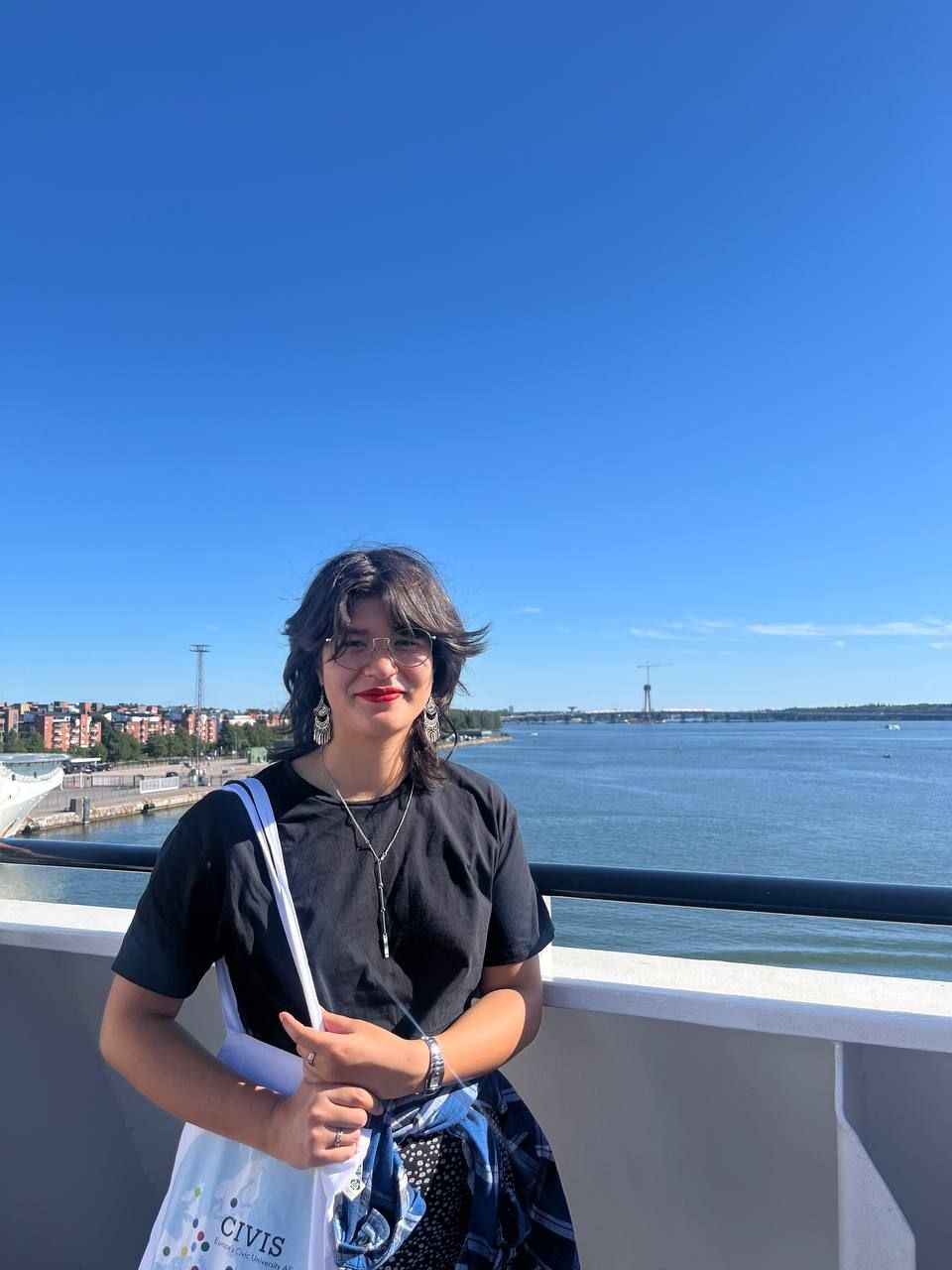
Inzhu Tanoz – Mikhail Eltsov’s team, IGBMC
Inzhu Tanoz is from Almaty, Kazakhstan. She completed her bachelor’s degree in Molecular and Cellular Biology in Strasbourg, followed by an M1 in Structural Biochemistry in Marseille.
She then realized that she preferred Strasbourg both for the master’s program and the city itself, so she returned to do M2 in Bioinformatics and Structural Bioimaging.
Her supervisor is Prof. Mikhail Eltsov, and herproject is about chromatin architecture. The main technique is cryo-electron tomography, a relatively recent method that requires many adaptations and methodological developments. Her work focuses mostly on image processing and analysis, so a large part of her PhD is computer-based, although she also does some bench work. She says “I enjoy the diversity of my work and the collaborative aspect of the project”.
Outside the lab, she does stand-up comedy in English and enjoy crocheting.
During her M2, she was part of the IMCBio master’s program, and she “appreciated the strong interdisciplinary training, international atmosphere, and supportive community”.
Continuing with the IMCBio PhD program felt like a natural choice for Inzhu, offering access to state-of-the-art facilities, and opportunities for both scientific and personal development.

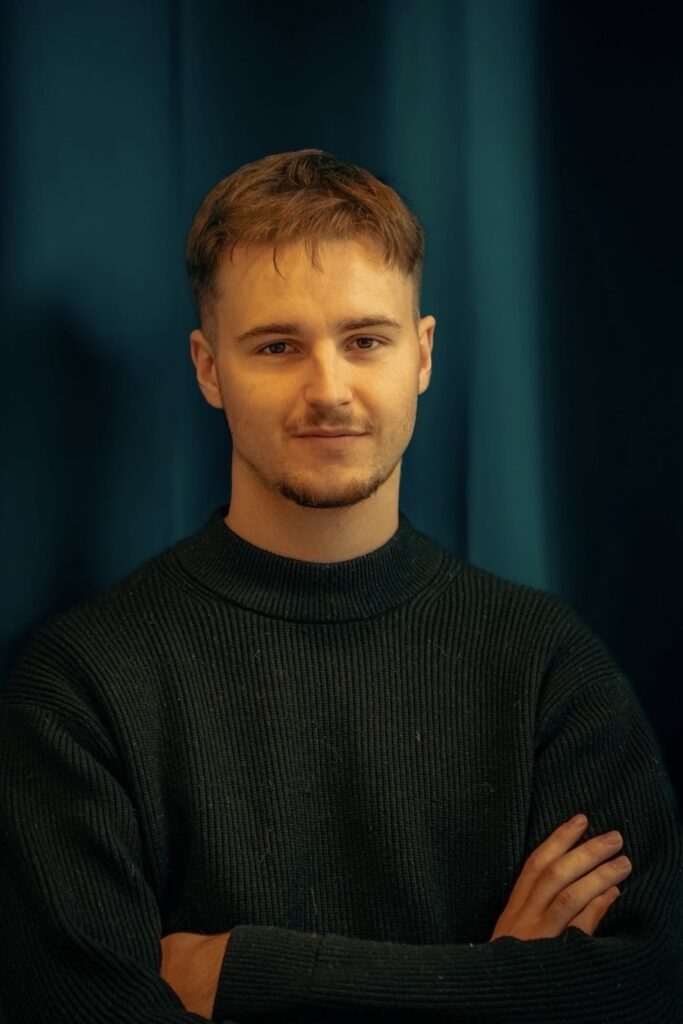
Loïc Boeglin – Nicolat Charlet’s team, IGBMC
Loïc Boeglin comes from a small village in the Haut-Rhin region of Alsace, France. He completed his bachelor’s degree in Cellular and Molecular Biology at the University of Strasbourg, within the Faculté des Sciences de la Vie, and subsequently obtained his master’s degree at the same university.
He says “I chose the Master’s program in Genetics and Molecular Biology because I have always been interested in pursuing a research career, and this program offered the most suitable academic and scientific training for this goal”.
As part of the master, he joined Nicolas Charlet’s team, which focuses on neurodegenerative and neuromuscular diseases — an area that strongly interested Loïc and continues to do so. The team is located at the IGBMC in Illkirch-Graffenstaden and is part of the Translational Medicine and Neurogenetics department. “I greatly appreciated both the research topic and the working environment, he adds, which led me to return to the same laboratory for my second-year master’s internship.”
Loïc is now a first-year PhD student in this team. His research focuses on the molecular basis of Spinocerebellar Ataxia type 36 (SCA36), a rare autosomal dominant neurodegenerative disorder caused by the expansion of GGGCCT hexanucleotide repeats in the first intron of the NOP56 gene. Although NOP56 is known for its essential role in ribosomal RNA processing, the molecular mechanisms by which this repeat expansion leads to neurodegeneration remain poorly understood.
Using classical cellular models, induced pluripotent stem cells, patient-derived tissues, and animal models, his PhD project aims to determine how an expansion located in a sequence annotated as “non-coding” can drive neurodegeneration, particularly in the context of SCA36.
He concludes “I am very grateful to be part of the IMCbio PhD program, which offers valuable opportunities for interdisciplinary training, collaborations, and scientific development that will be highly beneficial for my future career”.